How Voice Chat Transformed Online Multiplayer
28 December 2025
Remember the good ol’ days when online multiplayer felt like a silent disco? You’d run around the map, maybe fire off a few emotes, and hope your team had a clue what they were doing. Communication? That involved spamming preset messages or Morse code-level T-bagging in front of someone. Fast forward to now, and voice chat has turned that quiet chaos into a full-blown tactical opera.
Voice chat didn’t just tweak online multiplayer—it flipped the script. Whether you're battling zombies, building empires, or flexing your driving skills in a race, that tiny microphone icon changed everything.
Let’s dive headfirst into how voice chat went from a novelty to the heartbeat of online gaming.
The Early Days: Silence Was Golden (But Frustrating)
Before voice chat staked its claim, most online multiplayer games were...awkward. You typed frantically, using precious seconds that you should’ve been spending dodging that grenade. Or worse—by the time you managed to type, “watch out, trap ahead,” your teammate was already getting rekt.Sure, games like Counter-Strike and Starcraft had ways to communicate, but it was mostly through clunky text chat and, at best, some vague pings. If you ever had the pleasure of trying to coordinate a boss raid using only hotkeys and text boxes, you probably also know the stress lines that come with it.
Then came voice chat—and the reset button for multiplayer dynamics.
When Voice Chat Hit the Scene (Cue Dramatic Music)
Let’s rewind to the early 2000s. Consoles like the Xbox started pushing voice communication—remember Xbox Live? It was a game-changer. Suddenly, you could yell “Behind you!” or “Cover me!” instead of hoping someone caught your frantic pings.Games like Halo 2 and Call of Duty embraced voice chat early on, and players loved it. Sure, it wasn’t always smooth (remember the guy with the potato mic?), but it was real-time, raw communication. It turned average matches into memorable experiences.
You weren’t just playing a game—you were in it with people. Strangers became teammates. Teammates became friends. Sometimes... frenemies (we all know that one teammate who never shuts up).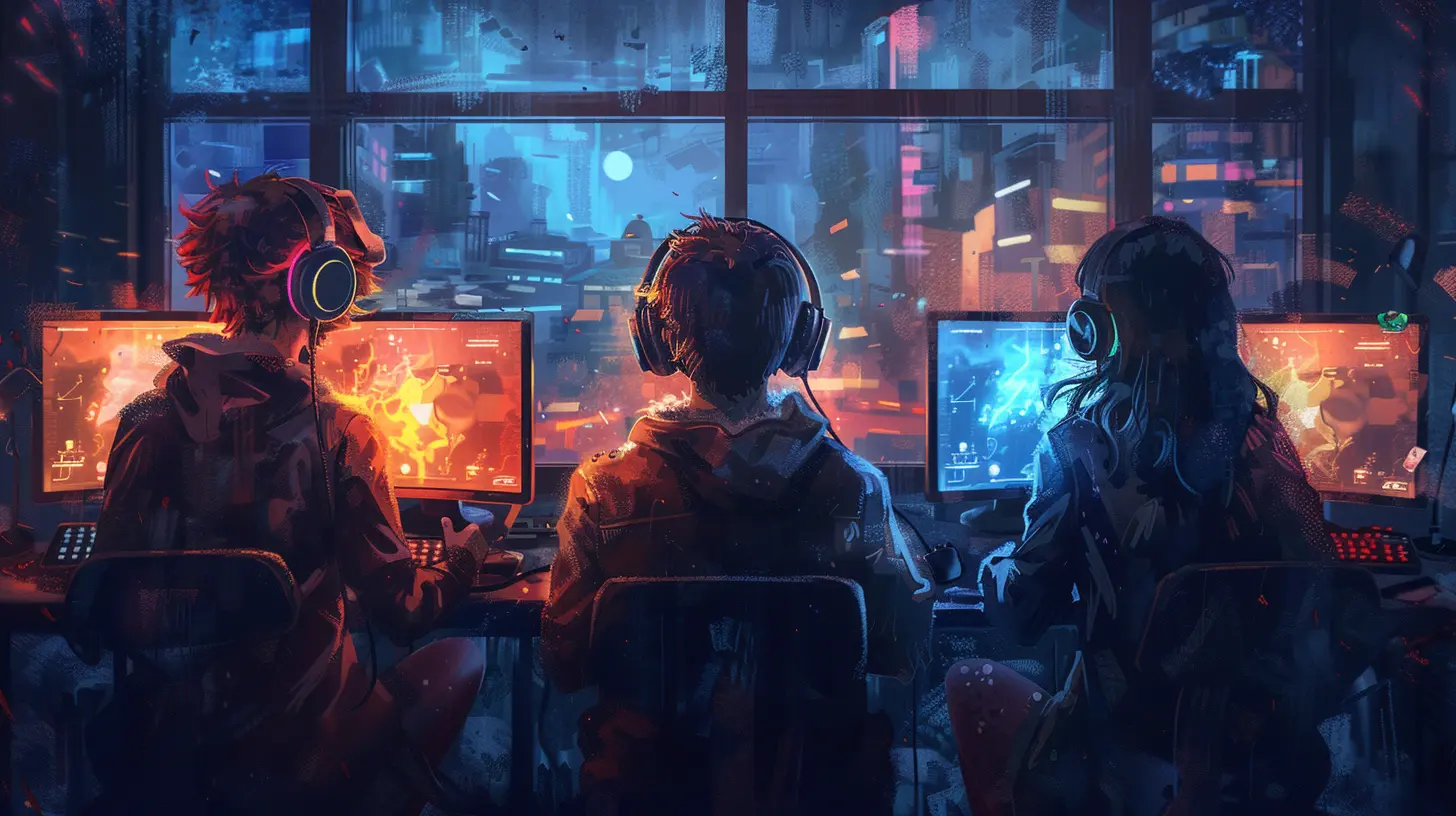
From Trash Talk to Tactical Talk: The Evolution of In-Game Communication
Let’s not pretend voice chat was all sunshine and victory dances. It had (and still has) its fair share of chaos.Yes, we’re looking at you, 13-year-olds shouting insults while clearly past their bedtime.
In its early years, voice chat was a lawless land. There was more trash talk than actual strategy. But over time, as games evolved, so did the players. Developers gave us tools to mute, report, and filter. Mics got better. So did etiquette (sort of).
Games started building voice chat tools around strategy. Think Overwatch’s team-based system, or Rainbow Six Siege where every word can mean life or respawn.
Today, voice chat isn’t just an option—it’s a tactical weapon.
Communication = Victory (Most of the Time)
You can have the best aim in the world, but if you’re not talking, your team’s probably going to lose. Why? Because voice chat enables coordination, and coordination wins games.Let’s break it down:
- Faster Response Time: Voice chat is instant. No typing, no lag. Just “LEFT FLANK!” and bam—your team’s adjusting.
- Real-Time Strategy: Plans change mid-fight. Voice chat keeps everyone on the same page.
- Morale Booster: Ever heard someone hype you up during a clutch? It’s like rocket fuel.
- Better Feedback: Communicate what went wrong, share tips, or say “GG” like a decent human.
Whether you're in a 4v4 or a 100-player battle royale, voice chat amplifies teamwork like nothing else.
Social Gaming: Voice Chat = New Friend Generator
Believe it or not, voice chat didn’t just make games more competitive—it made them more social.Multiplayer used to be all about beating the other guy. Now? It’s often about playing with people. Voice chat makes it feel like you're hanging out with friends—even if you’ve never met them IRL.
In games like Fortnite, Apex Legends, and even Among Us, voice chat has created entire communities. Strangers become duos, squads, and even lifelong gaming buddies.
And let’s be honest—it’s way easier to bond over shared panic when a horror game ghost is chasing you and your buddy’s screaming in your ear.
Voice Chat and Roleplay: A Whole New Level of Immersion
You ever hopped into a GTA V RP server or wandered through VRChat?Voice chat here isn’t just a feature—it’s the immersive glue. You’re not just playing a character—you’re becoming them. With voice chat, you can talk like a cop, act like a rogue trader, or roleplay as a medieval blacksmith who weirdly sounds like Morgan Freeman.
It’s theater meets gaming with a mic in your face.
Roleplay communities thrive because of voice chat. It gives life to avatars and adds depth to digital worlds. Text just can’t compete with someone suddenly yelling "ALL HAIL THE CHEESE WIZARD" in-character during a guild meeting.
Esports and Voice Chat: The Pro-Level Edge
Let’s not forget the esports world. Those pros? They’re not just pressing buttons faster than the speed of light—they’re communicating like military tacticians.Watch any Valorant or League of Legends tournament. Behind every flash and dive is a voice call made in a split-second. Teams practice not just gameplay, but how they talk to each other.
Because in high-level multiplayer, voice chat isn’t a bonus—it’s a requirement.
The Dark Side: Voice Chat’s Ongoing Challenges
Okay, so we’ve gushed about all the good stuff. But voice chat isn’t perfect. Far from it. With great power comes... a lot of noise. And sometimes, it’s not the good kind.Common Issues Include:
- Toxicity and harassment: Some players use voice chat to spread negativity, not teamwork.- Background noise: Dogs barking, moms yelling, fans blowing into the mic.
- Language barriers: Not everyone speaks the same language, which can complicate coordination.
- Audio quality: Ever heard someone sound like they’re talking through a blender?
Developers are working on AI moderation, better filters, and features like “push-to-talk” to help fix these. And thankfully, many gamers are stepping up to make the space more welcoming.
The Future of Voice Chat: Smarter, Safer, and More Immersive
We’ve come a long way from the days of screaming into a plastic headset.Now, we’ve got:
- Proximity Chat: Games like Rust and DayZ let you hear players based on how close they are. It's like real life—if real life had angry pirates and zombies.
- AI Voice Moderation: Detects offensive speech and dishes out consequences faster than you can say “toxic.”
- 3D Positional Audio: Makes it feel like your squadmate is on your left, not just in your headphones.
And let’s not forget VR voice chat, where the line between real and virtual is blurrier than ever.
Imagine a gaming future where voice chat includes auto-translation, emotion detection, or even AI teammates that actually understand you. We're not just talking – we're evolving how we connect.
Why Voice Chat Matters More Than Ever
Multiplayer gaming has become more than a way to blow off steam. It's how people socialize. It's therapy. It's meet-ups, battles, jokes, and shared experiences.And voice chat? It's the pulse of that multiplayer universe.
It turns digital avatars into humans. It takes silent wins and turns them into victory roars. It transforms solo queues into potential friendships.
In short, voice chat didn’t just transform how we play games. It transformed why we play them.
Final Thoughts: Mic Check, One Two… Game On!
So, whether you’re leading your squad in a raid, screaming during a horror game, or cracking jokes in a battle royale—you’ve got voice chat to thank.It’s quirky. It can be chaotic. And, sure, sometimes it's annoying. But at its best, voice chat is pure magic—a digital bridge that connects us across cities, borders, and ping times.
So plug in that headset, hit that push-to-talk, and let your voice be your power-up.
all images in this post were generated using AI tools
Category:
Online GamesAuthor:

Lucy Ross
Discussion
rate this article
2 comments
Gunner Clark
Voice chat has truly revolutionized the online multiplayer experience! It strengthens connections, fosters teamwork, and creates unforgettable moments. Embrace the power of communication and elevate your gaming adventures to new heights! Keep playing and connecting!
January 17, 2026 at 5:35 PM
Lucy Ross
Absolutely! Voice chat has indeed enhanced collaboration and camaraderie in gaming, making experiences more immersive and memorable. Thank you for sharing your thoughts!
Bria Matthews
Voice chat revolutionized online multiplayer by enhancing communication, fostering teamwork, and creating immersive experiences, fundamentally reshaping player interactions and community dynamics.
January 7, 2026 at 5:26 AM
Lucy Ross
Absolutely! Voice chat has indeed transformed online multiplayer by enabling real-time communication, which promotes better teamwork and enriches the gaming experience.