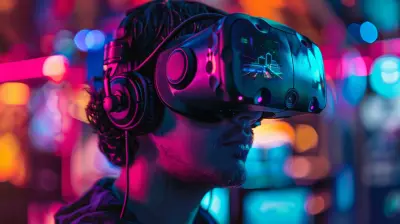
Next Big Thing in Open World Games
2 June 2026
Open world games have come a long way since the pixelated days of early RPGs. Think about it: we’ve gone from limited sprites waddling across a screen to full-blown universes where you can ride dragons, pilot spaceships, or just chill with some in-game coffee. But what’s next? What’s on the horizon that could shake up the open world genre all over again?
Let’s dive in and talk about the real game changers. The next big thing in open world games isn’t just better graphics or more expansive maps—it’s about smarter worlds, deeper immersion, and more meaningful interactions. Buckle up, because we’re about to explore what’s truly next for one of gaming's most beloved genres.
The Evolution of Open World Games ?
Before we gaze into the crystal ball, it’s worth looking back. Open world games have steadily evolved with every console generation.- Late '90s to early 2000s: Games like GTA III and The Elder Scrolls: Morrowind set the foundation.
- 2010s: Titles such as Skyrim, The Witcher 3, and Red Dead Redemption 2 raised the bar for world-building and narrative depth.
- 2020s: We’re now seeing games like Elden Ring and Cyberpunk 2077 push the boundaries of freedom, design, and technical power.
Each jump wasn't just about size but about player agency—the ability to do what you want, when you want, and how you want. But we’re reaching a point where bigger isn’t necessarily better. So, what's the next big thing?
Hyper-Realistic AI: Smarter Worlds, Not Bigger Ones ?
Ever notice how most NPCs just stand around, waiting for you to interact? Open world games are filled with characters, but most of them are just walking scenery.That’s about to change.
The next leap in open world games will be driven by AI-powered NPCs. Imagine a world where characters remember your actions, hold grudges, tell their friends about you, and actually live their lives. We're talking unscripted behavior that creates endless, emergent gameplay.
Think About It:
- What if a shopkeeper closes up early because of a personal emergency?- Or a guard starts treating you differently after overhearing your shady interactions?
Games like Watch Dogs: Legion began scratching the surface with generated characters and basic backstories. But with the rise of AI like ChatGPT and neural networks, the future promises conversations that actually matter and AI that really adapts, making the world feel alive—finally.
Procedural Storytelling: Your Game, Your Story ?
Let’s face it, most open world storylines follow the same formula. Go here, do that, fight this, save the world. It’s fun, but predictable.But what if no two players lived the same story?
Enter procedural storytelling, where narratives and quests are dynamically generated based on your playstyle, decisions, and even random events. Mix that with AI-driven dialogue and you've got a unique tale every time you boot up the game.
This means:
- Personalized main questlines
- Adaptive side stories that spin off from your choices
- Reputation systems that evolve dynamically, affecting who allies or betrays you
Imagine playing a game where you're not following a story—you’re writing it just by playing.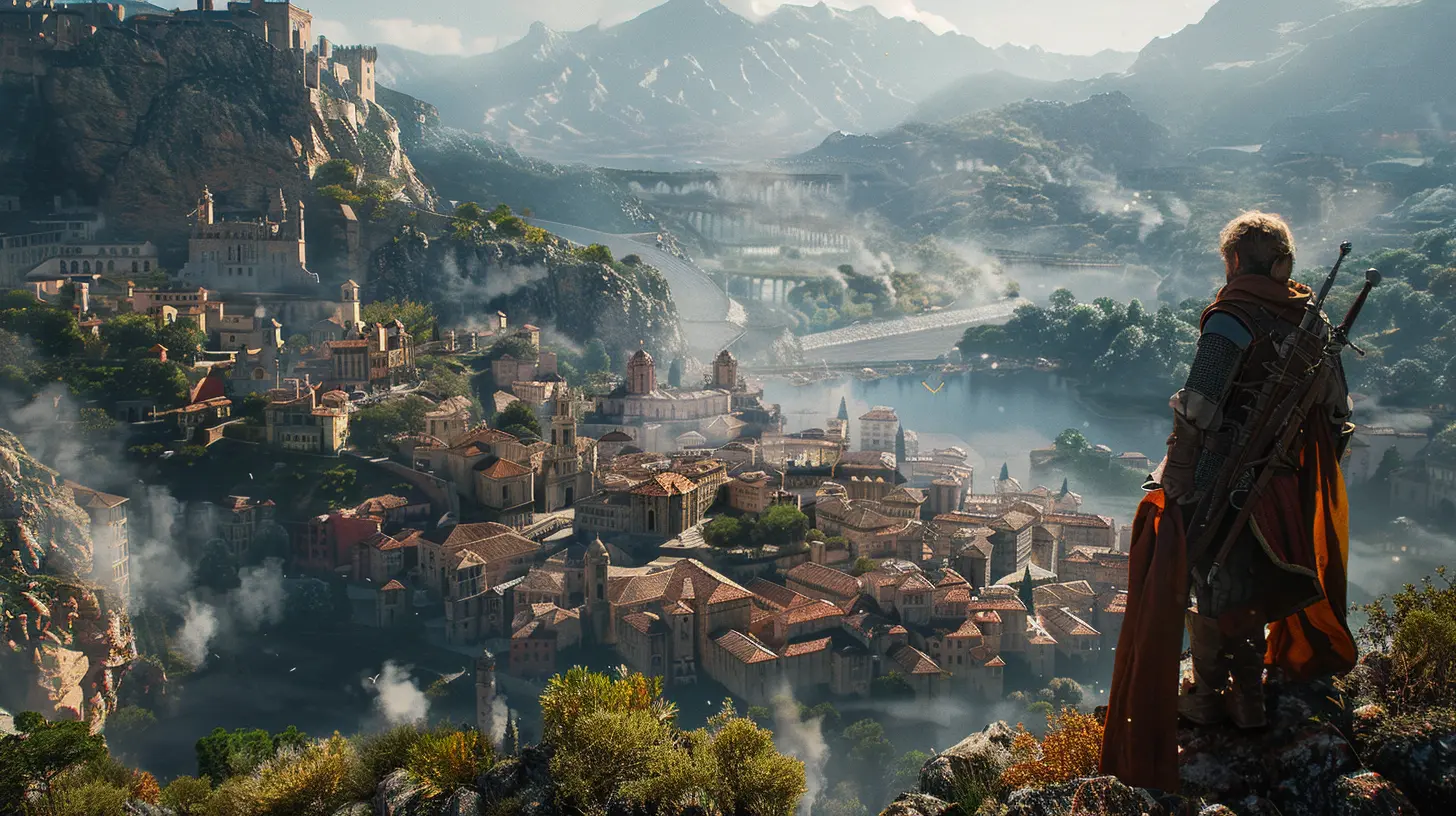
Seamless Real-World & Virtual Integration ?
The metaverse might be a tech buzzword, but there’s some serious potential here for open world games.Games like Pokémon GO and Microsoft Flight Simulator have already flirted with blending real-world data with in-game experiences. The next step? Real-time weather, live events, and location-based gameplay that pull from actual data and integrate it into your game.
Picture this:
- Your in-game city reflects the weather and time of your real-world location- Special quests or monsters appear based on current global events (e.g. a solar eclipse or festival)
- GPS-based mechanics similar to AR games, but on a deeper, more immersive level
It's not science fiction — just a few updates away from reality. This kind of integration brings a level of immersion that’s borderline surreal.
Accessibility and Cloud Technology: Open Worlds for Everyone ☁️
Traditionally, open world games are resource hogs. Massive downloads, heavy GPU demands… not everyone has the rig to handle them.But cloud gaming is flipping that script.
Services like GeForce Now, Xbox Cloud Gaming, and PlayStation Plus Premium are making it possible to stream high-quality games on budget devices—your smartphone, tablet, even your smart TV.
Soon, the "open world" won’t just exist inside a high-end console. It'll be something you can take with you—on the bus, on vacation, heck, even during lunch breaks.
The Real Game-Changer?
Developers will be less limited by hardware constraints. That means more complex worlds, smoother performance, and less compromise in design choices. With that freedom, innovation will flourish.Multiplayer Evolution: Shared Universes & Player-Driven Economies ?
We’ve seen games dabble with shared worlds—Destiny 2, GTA Online, and Elden Ring’s multiplayer elements come to mind—but the next big thing is about truly persistent shared universes.Imagine an open world that:
- Never sleeps—events continue even when you’re offline
- Is shaped by the collective actions of its player base
- Has functioning player-driven economies, politics, and even laws
We’re talking about MMO-like persistence without the rigidity of traditional MMORPGs. It's like crossing Minecraft's creativity, EVE Online’s politics, and Skyrim’s narrative structure into one cohesive experience.
And with cloud processing and real-time data transfer, it’s more doable now than ever before.
Dynamic Ecosystems and Living Worlds ?
Open world games have always tried to simulate nature. But here’s the kicker—it’s usually fake. Animals spawn out of nowhere, forests never regrow, and the weather has no real impact.Next-gen open worlds are going full eco-mode.
What does that mean?
- Predator-prey systems that evolve naturally
- Seasons that affect travel, NPC behavior, and resource availability
- Climate change mechanics where your actions (like overhunting or polluting) reshape the environment over time
Games like Horizon: Forbidden West started scratching the surface with animal behavior and natural cycles. But devs are now gunning for ecosystems that behave organically—with or without you.
VR and Sensory Immersion: Actually Stepping Into the World ?
We're already seeing some cool VR open world experiments, but so far, it’s been mostly gimmicky or trimmed-down versions of full games. That’s about to change.Soon, we’ll be stepping into fully-realized open worlds in VR that don't just look real—they feel real.
Add in haptic feedback suits, eye-tracking, and immersive sound design, and you'll get:
- Combat where you feel the clash of swords
- Exploration where terrain changes your movement feedback
- Conversations where tone and eye contact affect NPC responses
It’s like Ready Player One, but, you know… with slightly fewer dystopian undertones.
The Rise of Player-Created Worlds and Mods ?️
One of the unsung heroes of open world games? The modding community.The next big evolution could be integrating mod tools directly into the game itself. Think Dreams or Roblox, but for serious AAA open world titles.
Imagine:
- Creating your own side quest or zone
- Customizing town layouts or introducing new factions
- Sharing your creations with a global network of players
We're talking about player-powered content ecosystems where the world keeps growing long after launch.
Developers are already realizing that handing over creative tools to players builds longevity. Just look at how Skyrim is still thriving after more than a decade—thanks to mods.
Ethical Systems and Moral Complexity ?
Morality in games has mostly been black and white. Be a saint or be a monster. But real life? It's a bit murkier.Future open world games are moving toward gray-area moral choices where the consequences are subtle, long-term, and emotionally impactful.
Picture this:
- A decision you make early in the game leads to civil unrest 20 hours later
- Helping one faction leads to another collapsing, unintentionally harming innocents
- Your character's personal values evolve based on your actions—just like in real life
Games like Disco Elysium and Cyberpunk 2077 dipped their toes into moral ambiguity. But upcoming titles aim to make you sit with your decisions, not just reload for a better outcome.
So, What Is the Next Big Thing in Open World Games?
It’s not just one thing—it’s a combination of intelligent systems, deeper narratives, emotional immersion, and player freedom that will reshape how we play.To sum it up:
- AI-driven characters will feel alive
- Stories won’t just be told—they’ll be lived
- Worlds will reflect real-world data and evolve dynamically
- Anyone, anywhere, on any device can join the adventure
- Your interactions will have real, lasting consequences
The next big thing in open world games isn't just one big shiny feature—it’s a mindset shift. It's about less scripting, more simulating. Less predictability, more personality.
And honestly? We couldn't be more excited for the worlds we'll get to step into next.
all images in this post were generated using AI tools
Category:
Game NewsAuthor:

Lucy Ross
Discussion
rate this article
1 comments
Foster Barrett
Imagine a world where squirrels are the heroes and every tree is a quest... Sign me up!
June 7, 2026 at 3:12 AM