The Blending of Real-World Instruments and Digital Sounds in Modern Game Scores
22 March 2026
Ever paused a game just to keep listening to the background music? Yeah, me too. In today’s gaming world, the soundtrack is way more than just a backdrop — it’s part of the experience. But have you ever wondered how composers find that perfect mix between heart-thumping realism and futuristic vibes? It all comes down to a fascinating mix: real-world instruments and digital sound production.
Let’s dive into how this beautiful blend is transforming modern game scores into unforgettable works of art.
Why Music in Games Even Matters
Alright, before we get into the technical magic, let’s take a quick step back. Why is music so important in games, anyway?Imagine playing a horror game with no eerie tune creeping in the background. Or exploring a fantasy world without that sweeping orchestral sound. It just wouldn’t hit the same, right? Game music sets the mood, builds tension, fuels adrenaline, and often, tells a story all on its own.
Game Scores: The Unsung Heroes
Unlike film scores that follow a fixed timeline, game music has to be dynamic — it changes based on what you, the player, do. That’s a big challenge, and composers have to be creative. That’s where the combo of real instruments and digital tools really shines.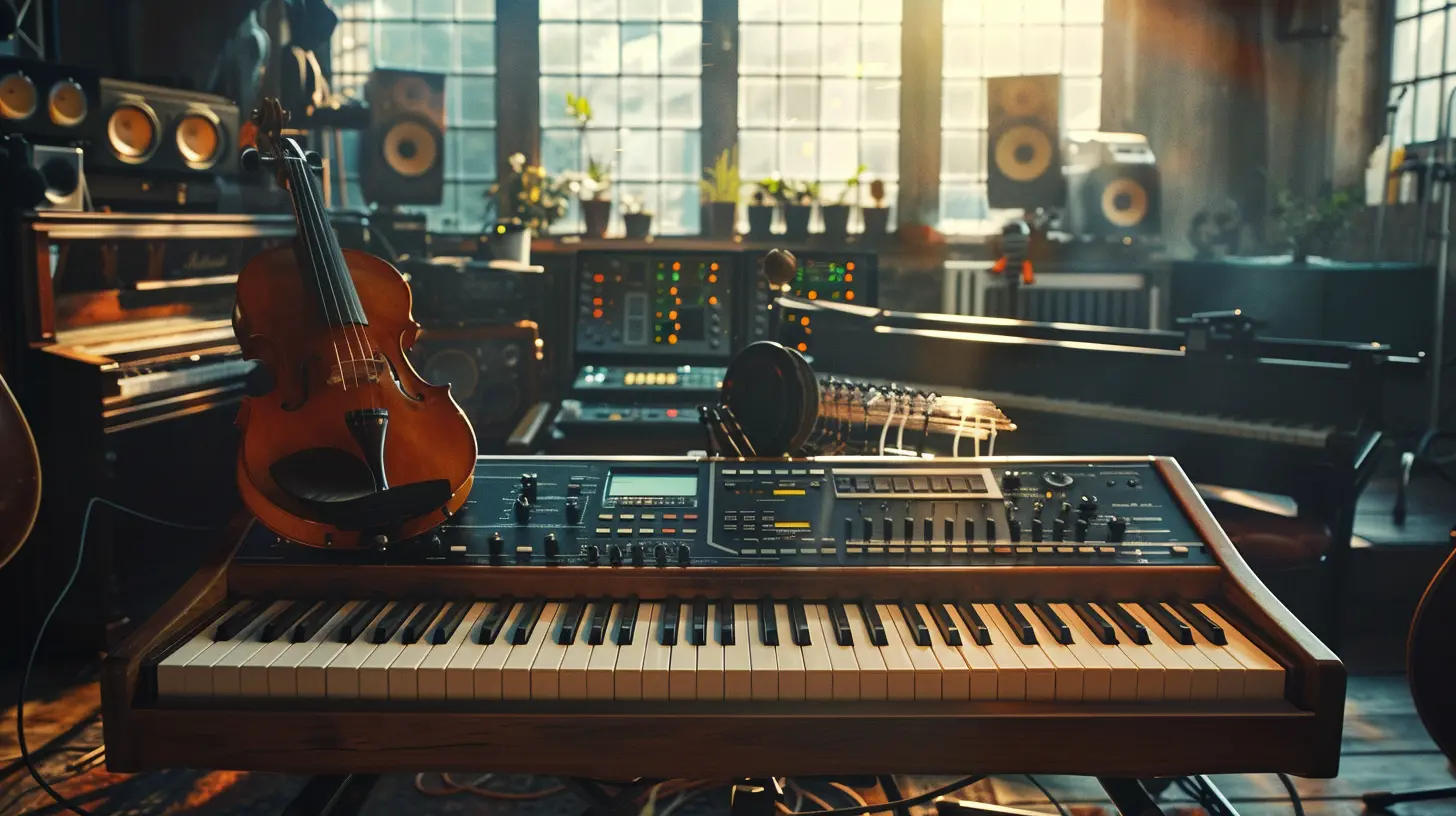
The Real-World Element: Instruments with Soul
There’s something magical about the sound of a real violin crying, or the deep hum of a didgeridoo. Real instruments carry emotion. They're imperfect — and that’s a good thing. Those tiny imperfections, the breath between notes or the slight vibrato, make the sound more human.Why Use Real Instruments?
- Authenticity: Nothing beats the texture of a live performance.- Emotional Depth: Real instruments often stir deeper emotions.
- Cultural Connection: Using instruments from different cultures can transport players to entirely new worlds.
Take the haunting flute in Ghost of Tsushima, for instance. It doesn’t just sound authentic — it feels like you’re stepping into feudal Japan. That’s the power of traditional instruments.
The Digital Side: Infinite Possibilities
Now let’s talk tech. Digital sounds, synthesizers, and virtual instruments have transformed what’s possible in music creation — especially in games.The Benefits of Going Digital
- Flexibility: You can tweak, stretch, and completely reimagine sounds.- Efficiency: Composers can test multiple ideas in minutes, not days.
- Innovation: Want a cello made of thunder? Go digital.
Modern music software lets composers build soundscapes that would be impossible with real instruments alone. Think about the glitchy, robotic vibes in cyberpunk games or the dreamy, lo-fi beats in cozy indie titles — that's all digital wizardry.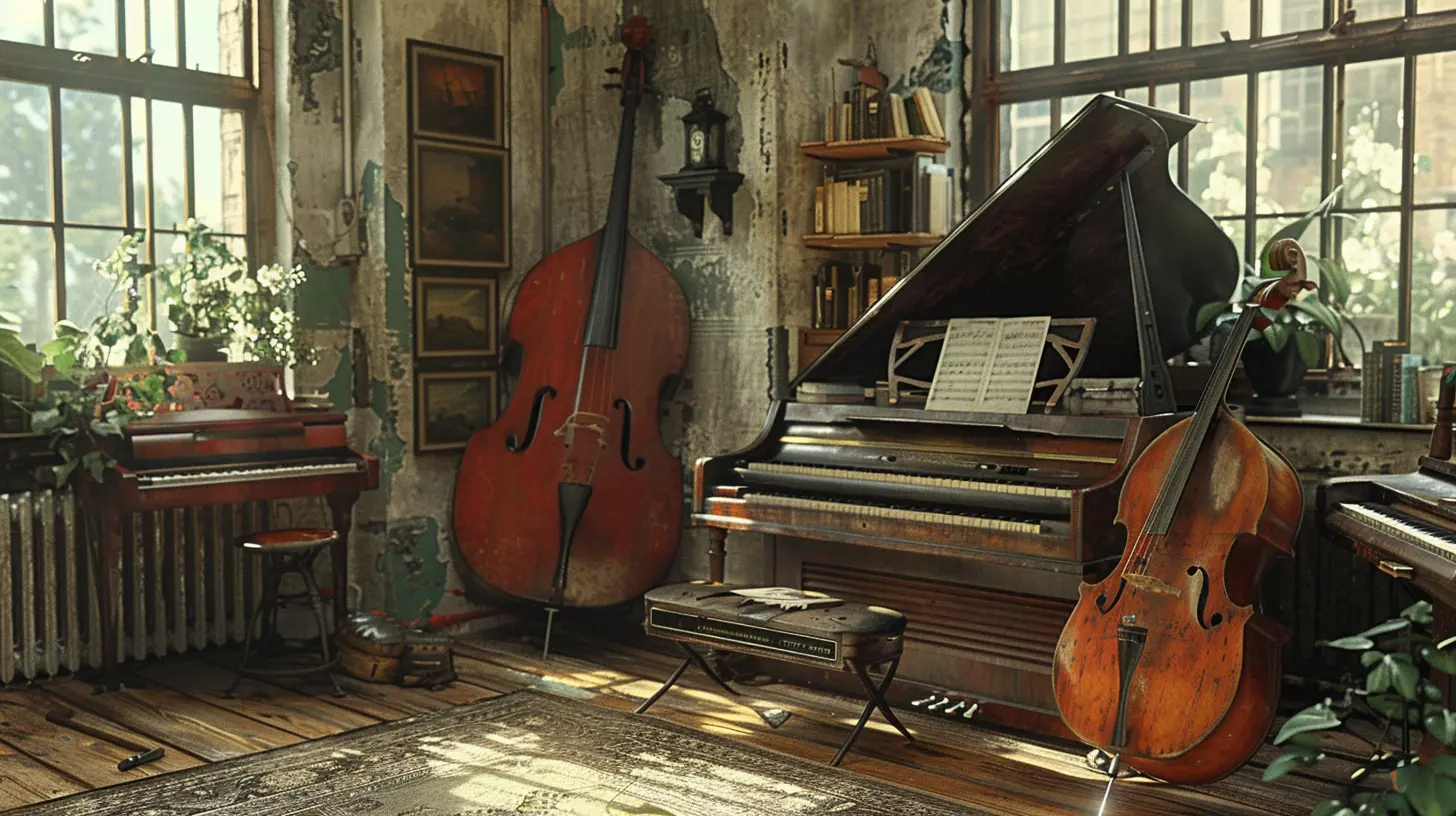
So, What Happens When You Mix the Two?
Alright, here’s where it gets juicy. The real magic happens when composers blend these worlds — combining earthy, human instruments with futuristic, synthetic sounds. It creates something totally unique: a game score that feels alive, breathing tradition and innovation in every note.Games like The Last of Us, Horizon Zero Dawn, and God of War absolutely nailed this. Let’s break it down.
Case Study #1: The Last of Us Series
Gustavo Santaolalla’s music in The Last of Us is raw, stripped-down, and deeply emotional. He often uses a real, untuned guitar, creating a sound that's ultimately human and flawed — much like the game’s characters.But here’s the twist — those acoustic tones are often backed by layers of subtle digital ambiance, giving you a sense of unease, an undercurrent of tension. That blend is genius. Real emotions meet post-apocalyptic dread — and man, it works.
Case Study #2: God of War (2018)
Bear McCreary took things to a whole new level. Real Nordic instruments? Check. Massive orchestral elements? Check. But he didn’t stop there — digital layers twisted underneath created a sense of ancient meets modern.The game’s score grows as Kratos and Atreus journey through the Norse realms, and the music evolves too — from minimal and intimate to grand and terrifying. The digital components gave this epic scale, while the real instruments kept it grounded.
Case Study #3: Horizon Zero Dawn
Talk about merging tech and nature. This game is literally about a future world with robot dinosaurs, and the music reflects that perfectly.Composer Joris de Man fused tribal drums, wooden flutes, and live strings with pulsating synths and digital effects. What do you get? A sonic landscape where past and future collide — just like the game world itself.
Behind the Scenes: How Composers Pull This Off
So, how exactly do game composers blend real-world and digital elements? It’s not just throwing stuff together and hoping it sticks.Step 1: Story Comes First
Before a single note is played, composers dive deep into the game’s world. What's the vibe? Who are the characters? What emotions need to be evoked?Step 2: Choosing the Right Tools
Now it’s time to pick instruments. Maybe a live cello for warmth. Maybe an analog synth for that edgy, futuristic tone. It’s like picking colors for a painting — each sound has a role.Step 3: Recording + Sound Design
Live musicians are recorded, often in layers. Then digital software adds reverb, delay, distortion — whatever’s needed to manipulate the sound and make it fit the game’s atmosphere.Step 4: Interactive Integration
Here’s where game music differs from movie music. It has to change based on what the player does. So composers work closely with audio engineers and programmers to make sure the score reacts to gameplay.The Rise of Hybrid Soundtracks in Indie Games
It’s not just AAA titles doing this. Indie games are absolutely killing it with hybrid scores. Take Ori and the Blind Forest — live piano, soft strings, and digital enhancements that make it sound like a lullaby from another universe.Or Hyper Light Drifter — entirely synthetic, but with melodies that feel human. It’s all about emotion and expression, whether from a violin or a virtual pad.
Gamers Notice (Even If They Don’t Know It)
Here’s the thing — even if players don’t know what's happening behind the scenes, they feel it. That subtle blend of natural and synthetic creates an emotional depth that sticks with us long after we put the controller down.You ever hear a tune from a game years later and suddenly feel all those memories rush back? That’s no accident. Music connects us to moments, digital or otherwise.
What This Means for the Future of Game Music
We’re just getting started. With advances in AI, procedural music, and immersive VR audio, the line between real and digital is only going to blur further. But one thing’s clear: human emotion will always play the starring role.Composers will keep experimenting — blending traditional instruments, strange noises, and even player-generated sounds, to craft scores we’ve never heard before.
Final Thoughts
So the next time you're deep into a game, take a moment to listen closely. That haunting melody, that rising tension — chances are, it’s the work of a real musician, a digital composer, or a brilliant mix of both.The blending of real-world instruments and digital sounds isn’t just a trend — it’s the new language of storytelling, one that speaks directly to your heart through your headphones.
And honestly? We’re lucky to be playing in this golden age of game music.
all images in this post were generated using AI tools
Category:
Original SoundtracksAuthor:

Lucy Ross
Discussion
rate this article
2 comments
Lauren Gray
Embracing the fusion of real instruments and digital sounds isn’t just innovation; it’s a revolution. Game scores are no longer mere backgrounds; they're immersive experiences that elevate storytelling to new heights. Embrace it!
March 28, 2026 at 5:56 PM
Lucy Ross
I completely agree! This fusion transforms the gaming experience, making scores integral to the narrative. It's an exciting time for both composers and players.
Drake McAlister
Absolutely love how modern game scores fuse real-world instruments with digital sounds! 🎶 It adds such depth and emotion to gameplay. Can't wait to hear more innovative compositions in future titles!
March 26, 2026 at 4:13 AM
Lucy Ross
Thank you! I agree—it's exciting to see how composers are enhancing gameplay with this fusion. Innovations in this area promise to bring even richer experiences in future titles!