What Developers Wish You Knew About VR Games
16 April 2026
Virtual Reality (VR) gaming is probably one of the most jaw-dropping tech leaps we've made in the past decade. It’s immersive, it’s futuristic, and when done right… holy heck, it’s mind-blowing. But behind every epic VR sword duel and zombie apocalypse survival is a developer silently screaming into the void, “PLEASE JUST READ THE TUTORIAL!”
So, let’s lift the hood on the pixelated Ferraris that are VR games and chat about what developers actually wish we knew — stuff that would make their lives easier and your gaming experience waaay better.
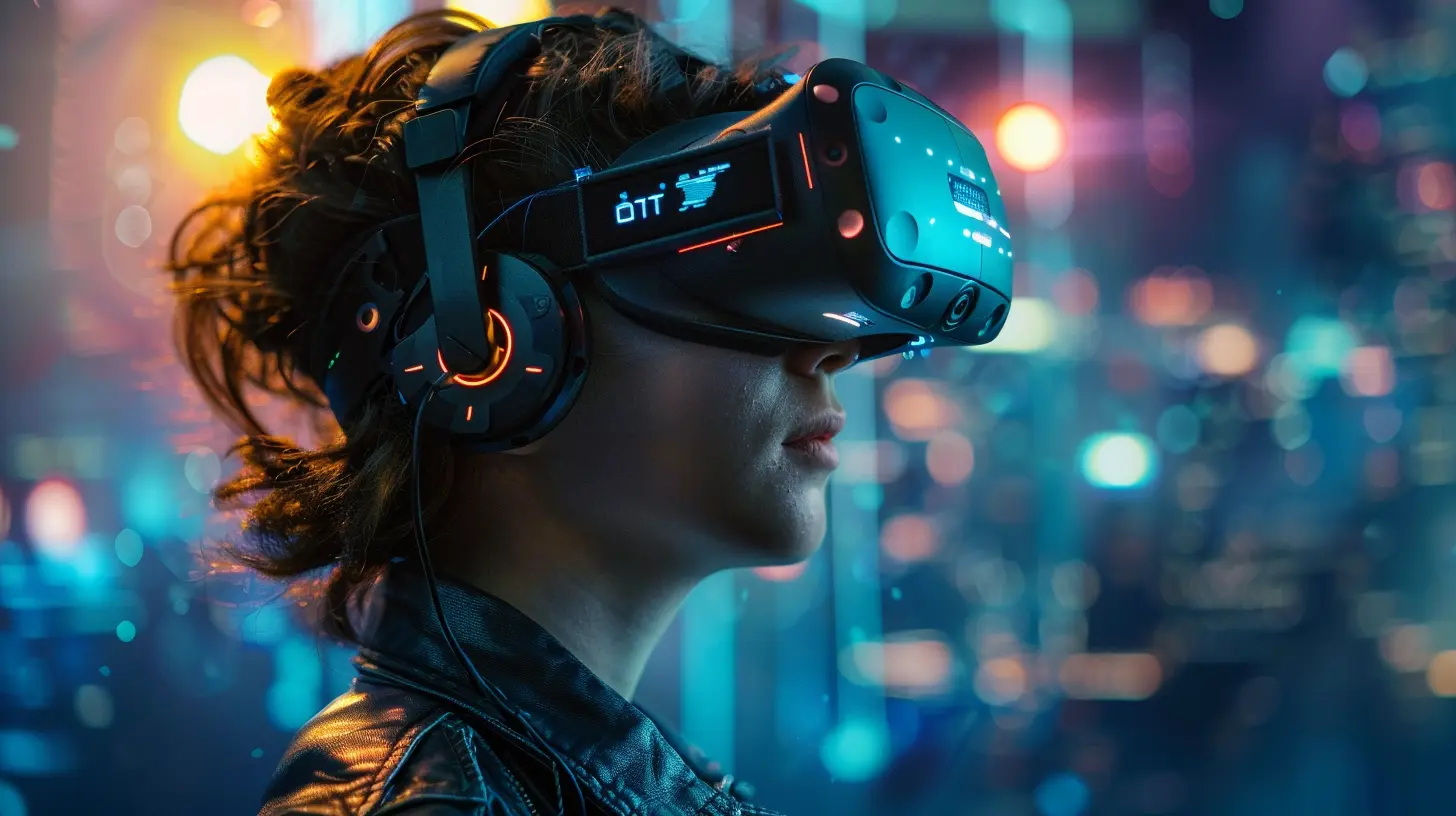
The Struggle Is (Hyper)Real
Imagine trying to bake a cake while wearing ski gloves and balancing on a tightrope — that’s kind of what developing a VR game feels like. You’re not just coding a game; you’re coding for a world people will live in, move in, and interact with in real-time 3D space. No pressure, right?1. Not All VR Games Are Created Equally
This might sound like a “duh” moment, but seriously, not all VR games are built the same. Some are made for standalone headsets like the Meta Quest, while others require a beefy PC. Some are room-scale, others are stationary. And don’t even get developers started on motion controllers versus hand tracking.? What they wish you’d do? Check your hardware specs before blasting a one-star review because “it wouldn’t load.”
2. Physics in VR Is… a Freaking Nightmare
In traditional games, physics is tough. In VR? It’s a whole circus.Letting players pick up a virtual coffee mug sounds simple. But making that mug behave how your brain expects it to in a 3D space — including weight, momentum, angles — that's a coding black hole developers fall into often.
And when people scream, “WHY CAN’T I THROW THIS GRENADE PROPERLY?!” — please understand there’s a genius somewhere who spent 2 weeks perfecting the grenade’s arc, only for a dozen players to yeet it straight into their own faces anyway.
3. Motion Sickness Isn’t Just Your Problem
VR sickness is real, and it sucks. But guess what? Developers don't want you to feel like barfing either. They spend a scary amount of time tweaking movement speeds, camera placements, and teleporting features just to keep your cookies down.?♂️ Want to run in VR? Cool. Developers now have to simulate movement that your eyes believe but your body doesn’t. That’s where design gets trippy.
Immersion Is A Double-Edged Sword
4. Yes, We Know Your Hands Go Crazy Sometimes
Every VR dev has watched gameplay footage of a player’s arms flailing like a Muppet on fire. Hand tracking and controller alignment are magical… until they’re not. If your hands are floating across the room or upside-down, it's usually due to tracking loss — not lazy coding.? Solution? Calibrate early, calibrate often — and clean your sensors!
5. Interactions Are Designed, Not Random
Opening a drawer in a VR game isn’t just someone dragging and dropping a 3D object. It’s a carefully scripted interaction. Developers literally have to "teach" the drawer how to open, what sound it makes, how it reacts to how fast you pull it, and what happens if another object is in its way.So when you say, “The drawer won’t open properly,” devs are glancing at their 300 lines of code and crying softly in Unity.
6. VR Isn’t Just Gaming — It’s Acting
Think about it: when you’re in a VR world, you’re in it. You’re not just pressing buttons — your body is the controller. Developers have to anticipate not just what you’ll do, but how you’ll do it.Will you duck when a virtual ball is flying at your face? Will you physically kneel to look under a bed? VR game design is closer to choreographing a live theater performance than traditional game development.
Feedback Is Gold… But Only When It’s Real
7. “This Game Sucks” Isn’t Helpful Feedback
We get it. You got decapitated by a glitchy boss, or your sword vanished mid-battle. FRUSTRATING. But a one-star review saying “Trash game” doesn’t help anyone.Want to be a hero? Take 60 seconds and jot down what actually happened. “Sword disappears when switching weapons in level 3” gives developers a clue. “Crashes every time I open inventory” is useful. “LOL worst game ever” is just noise.
8. Early Access Isn’t a Finished Product
Think of Early Access like a food truck testing a new burger — it’s tasty but might give you a weird burp. VR developers use Early Access to gather real-world player data. So, be kind, report bugs, and remember: you’re part of the process!
The Weird Stuff You Don’t Think About
9. Your Living Room Is a War Zone
You laugh, but developers have seen EVERYTHING. Players punching TV screens, tripping over dogs, flipping tables because the immersion was too real.VR developers have to account for your space too. That’s why many games include “Guardian Systems” or virtual boundary setups. They're trying to keep you from punching Grandma in the face while swinging your lightsaber.
10. Sound Design Is the Secret Sauce
Sound in VR isn’t just about background music. It’s how you know something is behind you, or that you've dropped your weapon (again).Spatial audio needs to be pinpoint accurate. Developers tweak footstep volume, echo balance, even how your own breathing sounds to make the experience feel real. Next time you hear a creepy whisper behind your shoulder — yeah, that’s a developer flexing.
What Makes VR Development Hardcore
11. Every Update Is Potentially a Timebomb
In VR, a small update can break everything. A patch designed to fix object collisions might accidentally make every enemy fly into space. There's no CTRL+Z in a live game world, folks.So when devs roll out updates slowly, it’s not laziness — it’s survival.
12. Testing Takes FOREVER
Unlike regular games, you can’t just run an auto-script to playtest VR. Someone — often the dev themselves — has to physically put on the headset, test the feature for an hour, realize it’s broken, fix it, and do it all over again. It’s a labor of love (and back pain).
Let’s Talk Controls (Because They Matter)
13. Everyone Has Different Hands, Man
This may sound goofy, but hands are a huge deal in VR. Developers design control schemes for small hands, big hands, lefties, and players with limited mobility. They have to make sure your virtual hand doesn’t morph into a spaghetti monster when you reach for a soda can.Remember how frustrating it is when a game’s controls just “feel wrong”? Imagine that in 3D space, where a bad control scheme could literally make you fall over.
14. Button Overload Is the Enemy
The more buttons you need to press in VR, the more complicated everything becomes. Devs are often balancing between intuitive design and functionality. Too many buttons? Players rage quit. Too little? Players want more options.Sometimes the best VR games are the ones that make you feel like a badass with just two buttons and clever motion tracking.
The Takeaway: Be Kind to Your Friendly Neighborhood VR Devs
Here’s the thing: VR is still kinda the Wild West of gaming. There are no hard-set rules, no ancient scrolls of “how to VR.” Developers are inventing the rulebook as they go.Each glitch, bug, and breakthrough is part of pushing an incredible, immersive medium forward. When VR works, it's like magic. When it doesn’t… well, it’s still kind of entertaining in a fail-compilation sort of way.
So next time you boot up a VR title, remember: there’s a sleep-deprived dev somewhere who poured their heart into making you feel like Batman, a Jedi, or a space explorer. Maybe send them a virtual high-five?
Final Thoughts
VR gaming isn’t just a hobby — it’s a ticket into alternate realities, and the folks building those realities are working their fingers to the bone to make it awesome. If you take anything from this, let it be this: VR developers aren't just coders. They're storytellers, physics nerds, artists, and sometimes, miracle workers.Next time your saber slips through a wall or your hands do the Cha-Cha Slide, don’t rage quit. Laugh, recalibrate, and remember — we’re all still figuring this out, one headset at a time.
all images in this post were generated using AI tools
Category:
Virtual Reality GamesAuthor:

Lucy Ross
Discussion
rate this article
2 comments
Cambria Hines
Great insights! Understanding developers' perspectives on VR challenges and innovations can enhance our appreciation for the medium. Excited to see how these insights shape future gaming experiences!
April 23, 2026 at 5:03 PM
Lucy Ross
Thanks for your thoughts! It's exciting to see how these insights can influence the future of VR gaming.
Daria Sullivan
VR developers are like wizards, crafting immersive worlds! But remember, folks, when they say 'just a little lag,' it’s like saying 'just a little dragon'—trouble may be lurking nearby! 🐉🎮
April 19, 2026 at 3:42 AM
Lucy Ross
Great analogy! A little lag can definitely turn a magic experience into a nightmare. Developers are working hard to keep those dragons at bay!