Why Some Online Games Fail to Keep Players Engaged
28 July 2026
Let's be honest — we’ve all been there. You hear the hype, see the trailer, pre-load the game, jump in on launch day… only to quit a few hours (or days) later. Some online games just don't stick. You want to love it, but something’s off. It’s like biting into a delicious-looking burger only to find it tastes like disappointment. So what gives?
In a world flooded with games competing for attention, keeping players hooked is an uphill battle. Some games manage to create deeply loyal fanbases — think Fortnite, World of Warcraft, or League of Legends. Others? They fade into oblivion faster than you can uninstall. In this post, we’re diving deep into the real reasons why some online games fail to keep players engaged — and why that happens way more often than it should.
The Honeymoon Phase: Why First Impressions Aren’t Everything
We all know how important first impressions are. A flashy trailer, stunning visuals, or a viral launch might pull players in initially. But what happens after the glitter fades? A lot of online games rely too heavily on launch buzz and forget one key thing — long-term engagement.Looks Can Be Deceiving
Some games over-promise and under-deliver. Sure, the graphics look like a Hollywood movie, but once you boot it up… the gameplay is clunky, the servers are buggy, or worse — it’s just plain boring.Players don’t just want eye candy. They want substance.
Bland Gameplay Loops — The Silent Killer
At the heart of every successful online game lies a satisfying gameplay loop. That’s the cycle of play that keeps you coming back for “just one more match.” Think of it like eating chips — one turns into twenty real fast.Repetition Without Reward
The problem? Some games mistake repetition for engagement. Doing the exact same thing over and over again without meaningful progress doesn’t feel fun — it feels like a chore.Players aren't goldfish — they remember what they just played, and if nothing changes or challenges them, they’ll dip out fast.
Poor Progression Systems = Lost Motivation
Progression is the carrot on the stick. When it’s done right, it makes you feel like a superhero in the making. Done wrong? It’s like running on a treadmill that doesn’t move.Grind vs. Growth
Nobody likes a grind for the sake of grinding. If leveling up feels like a second job or rewards don’t feel worth the effort, players will lose interest.A solid progression system should:
- Offer meaningful upgrades
- Scale with the player's skill
- Reward creative playstyles
If it’s just “kill 10 rats again” for the 50th time, peace out.
Lack of Player Feedback and Community Involvement
Let’s face it — gamers aren’t shy about voicing opinions. And that’s a good thing. If a developer listens and adapts, players feel like they’re part of something. But when devs ghost the community or ignore feedback entirely? That’s a recipe for disaster.Your Community is Your Backbone
When a game fails to foster a strong, respectful community, it’s basically ignoring its lifeline. Toxicity goes unchecked, cheaters run wild, and eventually, the player base gets fed up.Games that listen grow. Games that ignore? They go.
Broken Balancing and Power Creeps
Let’s talk competitive games for a second. If one character or weapon is OP (over-powered) and everything else is trash, the balance is off. And when the meta becomes stale or unfair? Players peace out for greener pastures.The Power Creep Problem
Adding stronger and stronger content to “keep things exciting” can backfire. If older characters or gear become useless, it discourages new players and frustrates veterans.Balance isn’t just a tech issue — it’s a trust issue.
Storytelling That Feels Stale (Or Nonexistent)
Even in online games, we want a reason to care. A bland, cookie-cutter story or zero narrative can make a game feel soulless. Compare that to something like Destiny 2 or Final Fantasy XIV — these games have rich lore that makes you feel part of a living, breathing world.No Heart? No Hook.
If you don’t give players something — anything — to get emotionally invested in, you’re asking them to care about pixels with no purpose. That’s a tough sell.Monetization Madness
This one’s controversial — we all get that devs need to make money. But when microtransactions feel more like macro-scams? Yeah, it’s gonna be a no from us, dawg.Pay to Win = Die to Quit
There’s a fine line between cosmetic items (cool) and game-breaking advantages (not cool). When players feel like they can’t compete without opening their wallets, that’s when they rage-quit for good.Long-term engagement comes from fairness and fun — not financial pressure.
Lack of Ongoing Content and Updates
Gamers are hungry for more. Once they finish the core content, the question becomes: “What now?”Some games fail spectacularly here.
The Content Drought
If a game launches strong but doesn’t have regular updates, new challenges, or fresh content, players bounce. Fast. In today’s ecosystem, players expect seasonal events, DLCs, and updates that keep the world alive.No updates? No players.
Technical Issues and Server Woes
Nothing kills a mood faster than game-breaking bugs, long queue times, and rubberbanding lag. If the game literally doesn’t work, players won’t stick around to give it a second chance.Performance Matters
A game has to feel smooth and stable. If it crashes more than it runs — even if the core gameplay is great — users will uninstall and leave a bad review for good measure.Toxic Communities – The Hidden Enemy
You might love the game, but if every match feels like a trip to troll town, it’s hard to stay positive.No One Wants to Be Harassed
If developers don’t actively moderate and encourage healthy behavior, hostile players can poison the entire experience. Communities can make or break the game's atmosphere.Toxicity is contagious — and not in a good way.
Overcomplicating the Experience
Sometimes, games are just… too much. Overly complex mechanics, steep learning curves, bloated menus — these are turn-offs for casual players who just want to jump in and have fun.Simplicity Sells
You don’t need to dumb things down, but there's power in intuitive design. Games that throw a million systems at you without explaining anything? That’s a hard nope for many.People want to feel smart, not overwhelmed.
The Hype Trap: Overmarketing and Under-Delivering
We get it — the hype is real. But it better match the actual experience. Some games ride the marketing train so hard that expectations shoot through the roof. And when the reality hits? Crash and burn.Hype is a Double-Edged Sword
If you promise the moon and deliver a flashlight, players will feel cheated — and that trust is hard to rebuild.Honesty goes a long way. Set clear expectations and deliver something solid, even if it’s not perfect.
Failure to Innovate
Games that feel like clones or lack originality don’t last long. Gamers want something new — or at least a unique spin on familiar ideas.Be Different or Be Forgotten
If a game feels like a watered-down version of something better, players won’t give it the time of day. Innovation is what separates the legends from the letdowns.Lifeless AI and Empty Worlds
Especially in MMOs or open-world online games, nothing breaks immersion faster than NPCs that feel robotic or worlds that feel hollow. If the world doesn’t react to your presence, then why explore at all?Make It Worth Exploring
Players need to feel like their actions matter. Whether it's through reactive storytelling, lively NPCs, or dynamic events — the world needs to feel alive.Otherwise, what’s the point of playing in it?
Final Thoughts
So, why do some online games fail to keep players engaged? It often boils down to one thing — a lack of thoughtful execution. You can have the best graphics, the biggest marketing budget, and the coolest features — but if the core experience is flat, players won’t stick around.It’s not rocket science, but it’s also not easy. The best games — the ones we play for years — respect our time, reward our efforts, listen to our feedback, and make us feel part of a living world.
If you're a game dev reading this, take this as constructive criticism wrapped in cozy gamer wisdom. And if you're a player who's bounced from one broken promise to another — hey, you're not alone.
Here’s to the games that get it right — and to the rest, may they patch their ways before it’s game over.
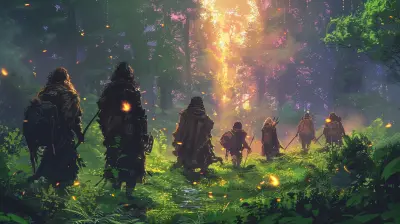
all images in this post were generated using AI tools
Category:
Online GamesAuthor:

Lucy Ross