The Psychology Behind VR Game Engagement
18 April 2026
Virtual Reality (VR) has changed the way we play games—and not just a little—it's a full-blown shift from couch-based gaming to full-body immersion. But what really makes VR so captivating? Why do some players spend hours with a headset strapped to their face, willingly sweating in their living room, ducking and dodging invisible enemies?
Well, the answer goes way deeper than fancy headsets and cool graphics. It's all about the psychology behind VR game engagement. Let’s dive into this immersive world and break down why VR games hook us in ways traditional games just can’t match.

What Makes VR So Immersive?
Before we get into the nitty-gritty psychology, let’s ask the big question: what even is immersion?Immersion is the feeling of being "inside" the game. In VR, this isn't just a concept—it’s the entire goal. For example, when you put on a headset and look around, you see a different world. Turn your head, and the world turns with you. Raise your hands, and boom—your virtual hands mirror your every move.
This level of sensory trickery fools your brain into thinking the virtual world is real, and guess what? That fooling is what leads to total engagement.
Presence: The Holy Grail of VR
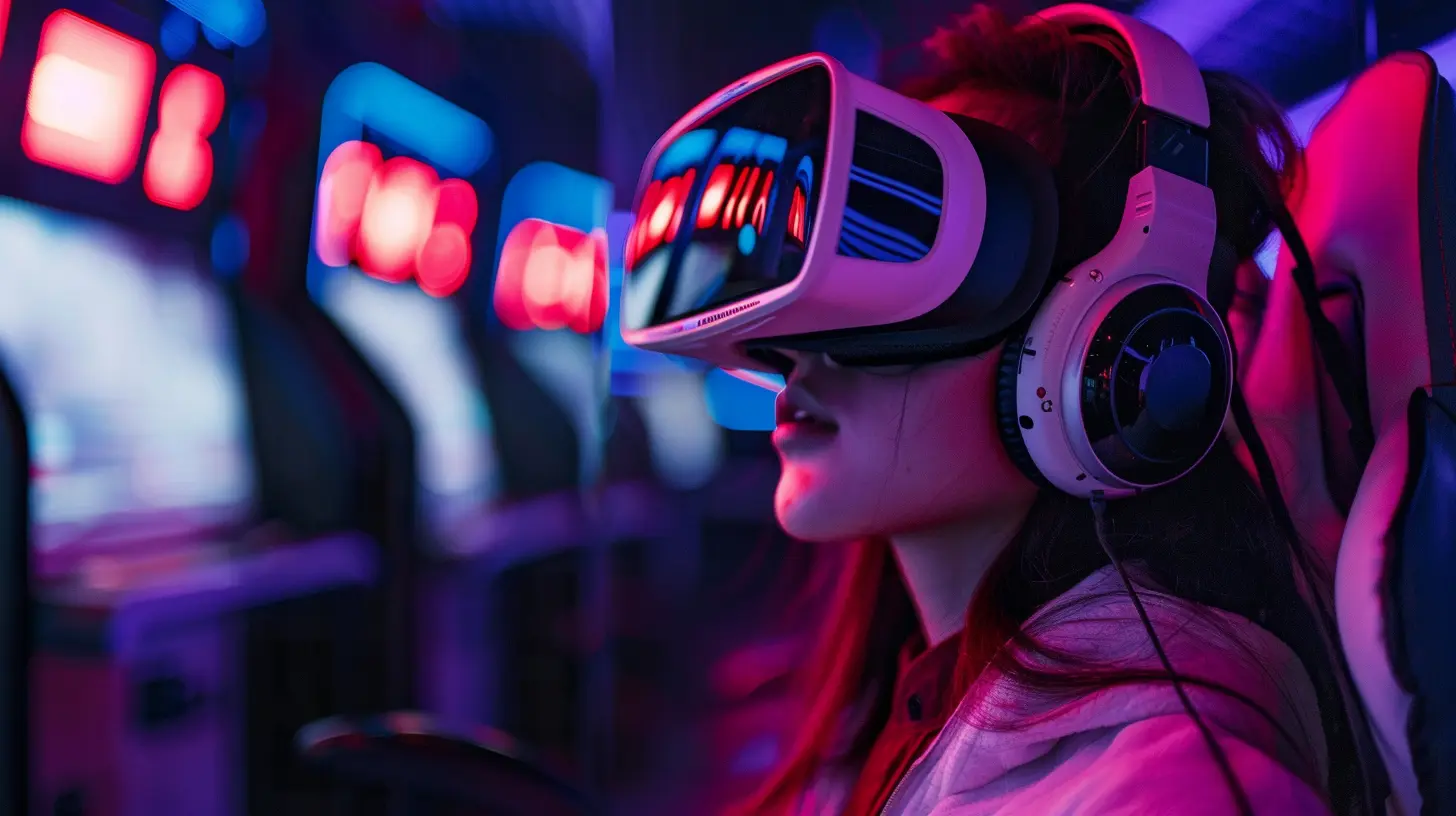
“Presence” is the term psychologists and developers use to describe the feeling of “being there” in VR. When presence is achieved, players forget they’re in a game. Instead, they're in a spaceship, a haunted house, or swinging through skyscrapers.Why does presence matter so much?
Because once someone feels present, their brain starts responding to virtual events as if they’re real. Heart races during a zombie attack? That’s presence. Flinching when an object flies toward your face? Also presence.
The stronger the presence, the more emotionally and physically the player gets involved. And that involvement is the secret sauce to VR’s addictive magic.
The Brain on VR: How It Reacts
Alright, let’s nerd out for a second—but in a fun way.Our brain is built to respond to sensory input. When VR simulates touch, sight, and sound accurately, the brain can’t always distinguish between virtual and real experiences.
- Visual input: High-resolution graphics and realistic environments activate the visual cortex just like real-world scenes.
- Spatial audio: Directional sound plays a huge role. You hear footsteps behind you? Cue the adrenaline.
- Kinesthetic feedback: Haptic controllers and motion tracking hook into our body’s proprioceptive system, helping us “feel” actions in the game.
This overload of sensory input tricks the brain into treating game events like real experiences. Ever felt your legs shake after a long VR session? That’s your brain trying to make sense of what just happened.
Flow State: Losing Yourself in the Game
Here's something every gamer craves—“the zone.” Psychologist Mihaly Csikszentmihalyi (try saying that five times fast) coined the term “flow” to describe the sweet spot where a person is fully focused, completely absorbed, and enjoying the challenge.VR games are uniquely good at triggering flow states. Why?
- Clear goals: Whether it’s beating a boss or solving a puzzle, you always know what to do next.
- Immediate feedback: You duck, the arrow misses. Simple cause and effect.
- Balanced challenge: VR scales difficulty to your skill level, keeping your brain engaged but not overwhelmed.
Get all of those elements right, and voilà—you’re so into the game, time just melts away.
Emotional Investment: Why We Actually Care
Let’s face it: we’re emotional creatures. We get attached, we get scared, we get hyped—and VR taps into all of that.In a traditional game, you watch your character get hurt. In VR, it feels like you’re getting hurt. The stakes feel higher. Relationships feel deeper. Interactions hit harder.
A great example is in VR storytelling games. Talking to an NPC (non-player character) face-to-face, with eye contact and natural gestures, creates a sense of connection. You’re not just pressing buttons—you’re forming relationships.
When players emotionally invest, they're far more likely to keep coming back.
Rewards and Motivation: The Dopamine Dance
Let’s talk about brain candy—also known as dopamine.Dopamine is the little chemical that makes you feel good when you achieve something. Games are dopamine factories. Every time you level up, win a match, or unlock a new sword, your brain gives you a treat.
Now add VR to the mix. The physical interaction makes the reward feel even more satisfying.
- Land a punch in a boxing simulator? Dopamine bump.
- Escape from a puzzle room? Oh yeah, big dopamine hit.
- Survive a zombie onslaught? That’s a cocktail of adrenaline and dopamine right there.
The more rewarding the experience feels, the more hooked players become.
Body Engagement = Mind Engagement
One of the coolest—and most overlooked—factors in VR engagement is physical involvement. You’re not just pressing buttons; you’re moving your whole body.Why does that matter?
Because physical movement engages your brain in deeper ways. Movement increases endorphins, boosts energy, and promotes focus. Ask anyone who’s played Beat Saber for an hour—it’s practically a cardio workout.
This full-body engagement creates something traditional gaming can’t offer—a fusion of movement and mental challenge. It’s like dancing while solving a Rubik’s cube. Your whole self is involved.
Social VR: Playing Together, Living Together
Online multiplayer is nothing new. But in VR, social interaction hits differently. It’s not just hearing someone’s voice—it’s seeing them wave, watching their avatar smile, even high-fiving after a win.In social VR games like VRChat or Rec Room, players build friendships through shared experiences. And guess what drives engagement more than anything else?
Yup—connection.
Humans are wired to seek social bonds. When VR allows us to build those naturally, it keeps us coming back, not just for the game—but for the people.
Escapism With a Purpose
Escapism gets a bad rap—but honestly, who doesn’t want to escape sometimes?In VR, escapism becomes meaningful. You’re not just zoning out; you’re stepping into new worlds, testing new identities, and writing your own story.
This sense of agency—of being the hero, the explorer, the warrior—is incredibly empowering. You leave your day job behind and become the person you wish you were, even if just for a while.
And that sense of purpose? That’s what keeps people immersed and engaged for the long haul.
Personalization and Player Identity
Another psychological gem VR taps into is identity. In VR, you craft your avatar, choose your wardrobe, even change your voice. You get to decide who you are.This personalization adds a deeper level of engagement. The game world becomes your mirror. Your actions, your choices—all reflect your virtual self.
Plus, when you invest time into crafting an identity, you're more likely to stay loyal to the platform. Ever spent hours perfecting an avatar? Then you know the attachment is real.
Challenges and Mastery
Let’s not forget good ol’ skill development. Gamers love a challenge—and VR presents unique ones.Balance. Depth perception. Real-world physics. Timing. Dexterity.
These aren’t just game mechanics—they’re high-level skills you have to learn and master. And as you do, your brain rewards you with a sense of progress and growth.
Overcoming a challenge in VR feels like winning a real-life mini-battle. That feeling? Highly addictive.
The Future of VR Engagement
With tech evolving and VR devices getting more affordable, we haven’t even scratched the surface of what engagement could look like.Imagine:
- Adaptive AI that changes your environment based on your mood.
- Hyper-realistic NPCs with emotional intelligence.
- VR games that adjust difficulty in real-time to keep you constantly in flow.
As VR becomes more intuitive and less bulky, the psychological hooks will get even stronger. Developers are already playing with brain-computer interfaces, eye-tracking, and even scent-based experiences.
The future of VR engagement doesn’t just look bright—it smells like popcorn and danger.
Wrapping Up
So why are VR games so insanely engaging?Because they tap into every part of us—our senses, our brains, our emotions, and even our social instincts. It’s not just about playing a game. It’s about stepping into a world that feels real, meaningful, and exciting.
If you’ve ever taken off your headset and felt like you just came back from an adventure... congratulations. You’ve experienced the magic firsthand.
And that magic? That’s the psychology behind VR game engagement.
all images in this post were generated using AI tools
Category:
Virtual Reality GamesAuthor:

Lucy Ross
Discussion
rate this article
2 comments
Brooke Ford
This article effectively explores the psychological factors driving VR game engagement. By highlighting both immersive experiences and potential challenges, it provides a well-rounded perspective for gamers and developers alike.
April 26, 2026 at 3:21 AM
Lucy Ross
Thank you for your thoughtful comment! I'm glad you found the exploration of psychological factors and challenges valuable for both gamers and developers. Your feedback is appreciated!
Darby McBride
VR isn't just a game; it’s a mind-bending rollercoaster! If you're not hooked, you might need to check your pulse—or your choice in games!" 🎮✨
April 21, 2026 at 2:40 AM
Lucy Ross
Absolutely! VR offers immersive experiences that engage our senses and emotions, making it a thrilling adventure beyond traditional gaming. 🎢✨