Why Porting Flat Games to VR Doesn’t Always Work
20 May 2026
So, you’ve just slid on your VR headset, booted up your favorite flat (non-VR) game that’s been "ported" to virtual reality, and... wait a second. Something feels off. The magic isn’t there. It’s like someone slapped duct tape on a painting and called it a 3D masterpiece.
Don’t worry—you're not imagining things. Porting flat games to VR doesn’t always work. In fact, sometimes it feels like trying to jam a square peg into a round hole. But why is that? Why can’t traditional games simply be transplanted into VR and feel just as good—if not better?
Let’s dive in and unpack this often frustrating, occasionally hilarious, and always intriguing issue.
What Does “Porting to VR” Even Mean?
Before we go too deep, let’s get on the same page. What exactly is a VR port? In the simplest terms, it’s when a traditional “flat” game—meaning one designed to be played on a 2D screen—is converted to be playable in virtual reality.Sounds easy enough, right?
Slap on some head tracking, add motion controller support, and boom—VR magic! Except, nope. That’s not how this works.
Porting a game to VR isn’t just about adding extra tech bells and whistles. It’s about transforming the core experience to fit a completely different platform, and that’s where it gets messy.
The Realities of Playing in a Fully-Immersive Space
Flat games are, by nature, limited. You’ve got a monitor, a controller (or keyboard and mouse), and your couch. That’s your world. VR, on the other hand, is about total immersion. It’s you, in the game, using your body and your senses.Think of it this way: playing a flat game is like watching a movie, while VR is more like acting in a play. The shift in perspective is massive—and that means a lot of things that work in 2D just fall apart in 3D.
Let’s Talk Movement (AKA Motion Sickness City)
Movement is hands-down one of the biggest hurdles when porting to VR.In traditional games, you move with a joystick or keys. Easy, right? But in VR, your brain expects your body to move when your virtual self does. So when you're zooming around with a joystick but your butt’s still planted in your chair, your brain goes, “What the heck is going on?!”
Cue the nausea.
Flat games often have fast-paced camera movement, dramatic head bobs, and wild spins. Those feel fine on a screen—but in VR? It's a no-go.
Ported games that don’t rethink movement entirely often leave players reaching for the sick bag. Some games try to fix this with teleportation or snap turning, but these band-aids don’t always feel natural in experiences that weren’t designed with that in mind.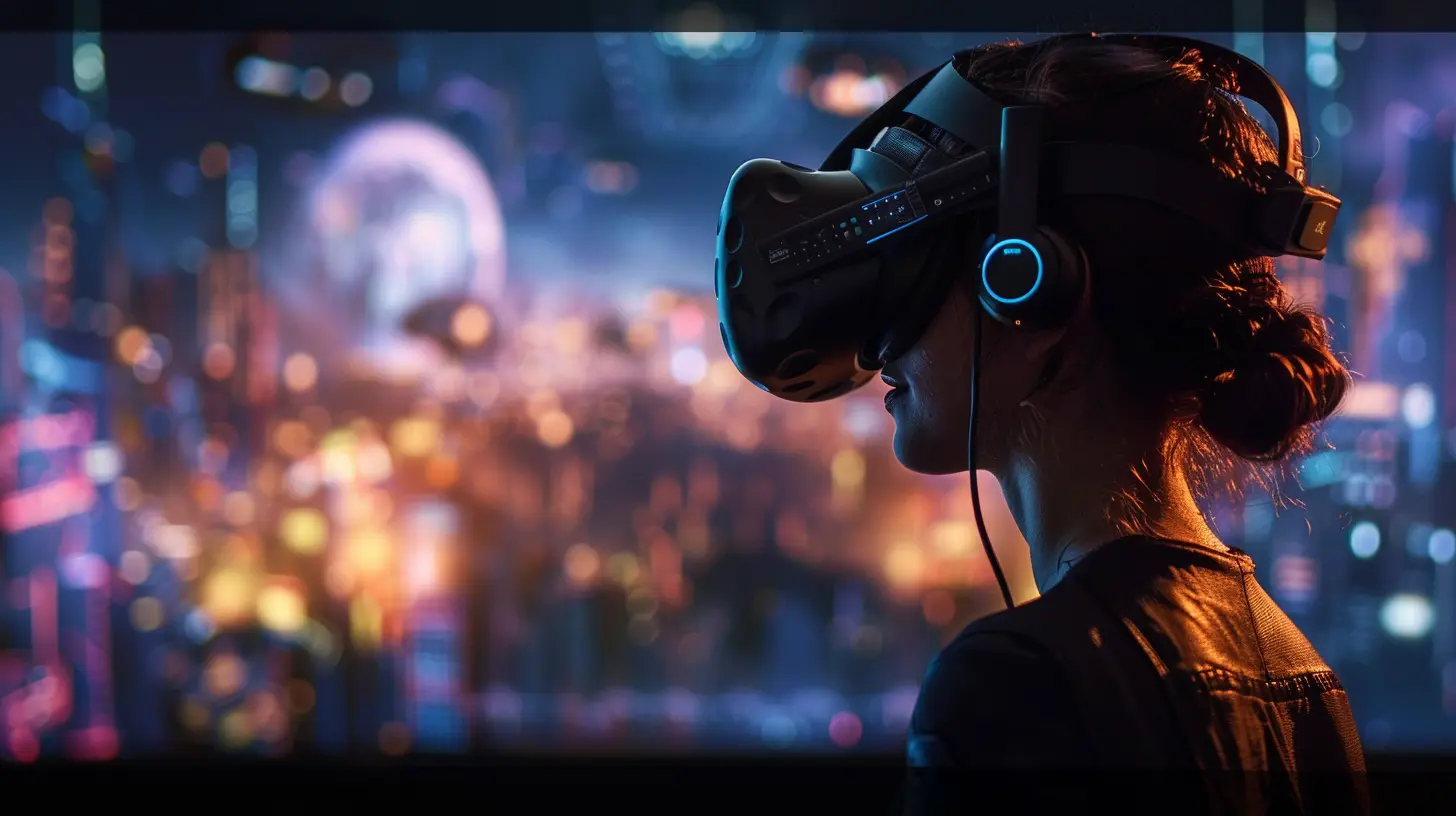
The UI Nightmare: Floating Menus & Clunky Interfaces
Ever tried to read a mini-map in VR that’s glued to your face like a sticker? Or worse—a health bar that’s floating somewhere over your left shoulder like a ghostly reminder of bad design?Flat games often rely on HUDs (Heads-Up Displays) that are fixed on the screen. Makes sense for a monitor. But in VR, where do you put all that stuff? You can’t just slap it around the player’s head and expect it to feel intuitive.
Good VR UI needs to be spatially aware—think wrist-worn menus or diegetic elements like physical screens inside the game world. Ported games rarely take the time to redesign all that, leaving players feeling disoriented and overwhelmed.
Cutscenes: From Cinematic to Clunky
Cutscenes are meant to be cinematic. They direct your gaze, tell you where to look, and often take control of the camera. This works great on a screen.But in VR, it’s like someone grabbing your head and spinning it around. Not fun.
Worse, if a cutscene suddenly switches to third-person, it totally breaks immersion. In VR, you are the character. Taking that away mid-game feels jarring. And don’t even get me started on unskippable cutscenes where you're stuck like a mannequin watching a play you can’t influence.
Interaction Fatigue is Real
In flat games, pressing a button to pick something up is effortless. In VR, you physically move your hand, grip the controller, and make the motion. Over and over again. Sounds fun at first, but after a few hours? It’s like going to the gym in pixel land.Ported games often expect players to do way more physical work than necessary, just because they can.
Not everything needs to be "immersive." Do I really need to pick up a virtual key with two fingers, turn it, and open the door with perfect wrist alignment? Sometimes you just want to press “E” and move on with your life.
The Art Doesn't Always Translate
Flat games are designed with a very specific perspective in mind. Environments can be deceptively shallow, textures can be less detailed, and models can be simplified in ways that look great on a screen.Throw all that into VR and, oof... suddenly it looks like you're walking through a cardboard diorama.
VR exposes every flaw. You’re up close and personal with the game’s world. That low-res NPC? Now it’s staring you in the face with dead fish eyes. That compressed texture? It's a giant smear of confusion when you lean in.
Unless the art’s been upgraded and optimized, it just doesn’t hold up.
Lack of VR-Specific Features
Great VR games are built for VR from the ground up. They think about physical presence, interaction depth, player comfort, and embodiment. They use haptics, spatial audio, hand presence, and so much more.Ported games? Not so much.
They might toss on VR support as an afterthought, but you can tell when a game wasn't crafted for virtual reality. It feels shallow. Like a party you weren’t really invited to—you’re there, but no one’s really talking to you.
Breaking the Immersion
VR is all about immersion. It’s why we’re willing to strap stuff to our heads and flail around like lunatics.But nothing kills that immersion faster than janky menus, clunky controls, weird camera angles, and UI that’s stuck in your eyeball. Every little thing matters in VR, and games that don’t take the time to recalibrate the experience just don’t feel right.
Imagine putting on a VR headset expecting a dream, and ending up in an uncanny valley fever dream instead. No thanks.
So... Can Flat Games Really Work in VR?
Sometimes, yes. But only when developers go the extra mile.There are success stories out there—games that have been lovingly rebuilt for VR. They rework the UI, rethink movement, tweak environments, and prioritize the comfort and experience of the player. These ports feel alive. They feel right.
But they’re the exception, not the rule.
Often, flat-to-VR ports are rushed, underfunded, or play it too safe. They treat VR as a feature, not a platform. And that’s the core issue.
What Devs Should Consider Before Porting
If you're a game dev thinking, "Hey, maybe we should toss our game into VR too!"—hold up. Ask yourself:- Is this game designed around head movement and physical interaction?
- Will the gameplay actually feel better in VR, or just different?
- Can our interface be adapted to spatial UI?
- Are our environments detailed enough for close-up inspection?
- Can we afford to invest real time into doing this right?
If the answer to most of these is “no,” it might be better to leave your game flat—or better yet, make a separate VR version built from scratch.
The Future of VR Ports
As VR continues to grow, we’ll hopefully see fewer lazy ports and more meaningful adaptations. Studios are starting to understand that VR users won’t settle for less. We want experiences that respect the medium—not just check a box.There’s also potential in hybrid games—experiences designed to work both flat and in VR with equal care. These could bridge the gap between traditional and immersive gaming, if done right.
But for now? Tread carefully. Not every game belongs in VR, and that’s totally okay.
Final Thoughts
Porting flat games to VR can be like translating poetry into another language. Sure, you can get the words right, but the soul? That takes finesse.Virtual reality is an entirely different beast. It demands new design principles, fresh ideas, and a whole lot of polish. Slapping VR support onto a flat game without rethinking its core is a recipe for disappointment.
So next time you hear about a beloved flat game getting VR support, take a pause. Ask the big question: is this a thoughtful remake or just another duct-tape job?
Because in VR, anything less than immersive just doesn’t cut it.
all images in this post were generated using AI tools
Category:
Virtual Reality GamesAuthor:

Lucy Ross
Discussion
rate this article
2 comments
Juno McAuley
It's fascinating to see how gaming evolves. While porting flat games to VR can be challenging, it opens up new possibilities for creativity and innovation. Every misstep teaches us more about what makes experiences immersive. Keep pushing boundaries and exploring new dimensions - the future of gaming is bright and full of potential!
July 9, 2026 at 3:46 AM
Lucy Ross
I appreciate your perspective. The challenges of porting to VR indeed spark innovation, and each attempt brings valuable lessons. It's an exciting time for gaming as we explore these new possibilities.
Elin Lawrence
Trying to fit a flat game into VR is like putting a square peg in a round headset... it just doesn't fit!
May 20, 2026 at 4:17 AM
Lucy Ross
I get your point. VR needs experiences designed for immersion, not just a flat adaptation.