Why simulating ocean waves is one of gaming's hardest challenges
July 21, 2026 - 04:41
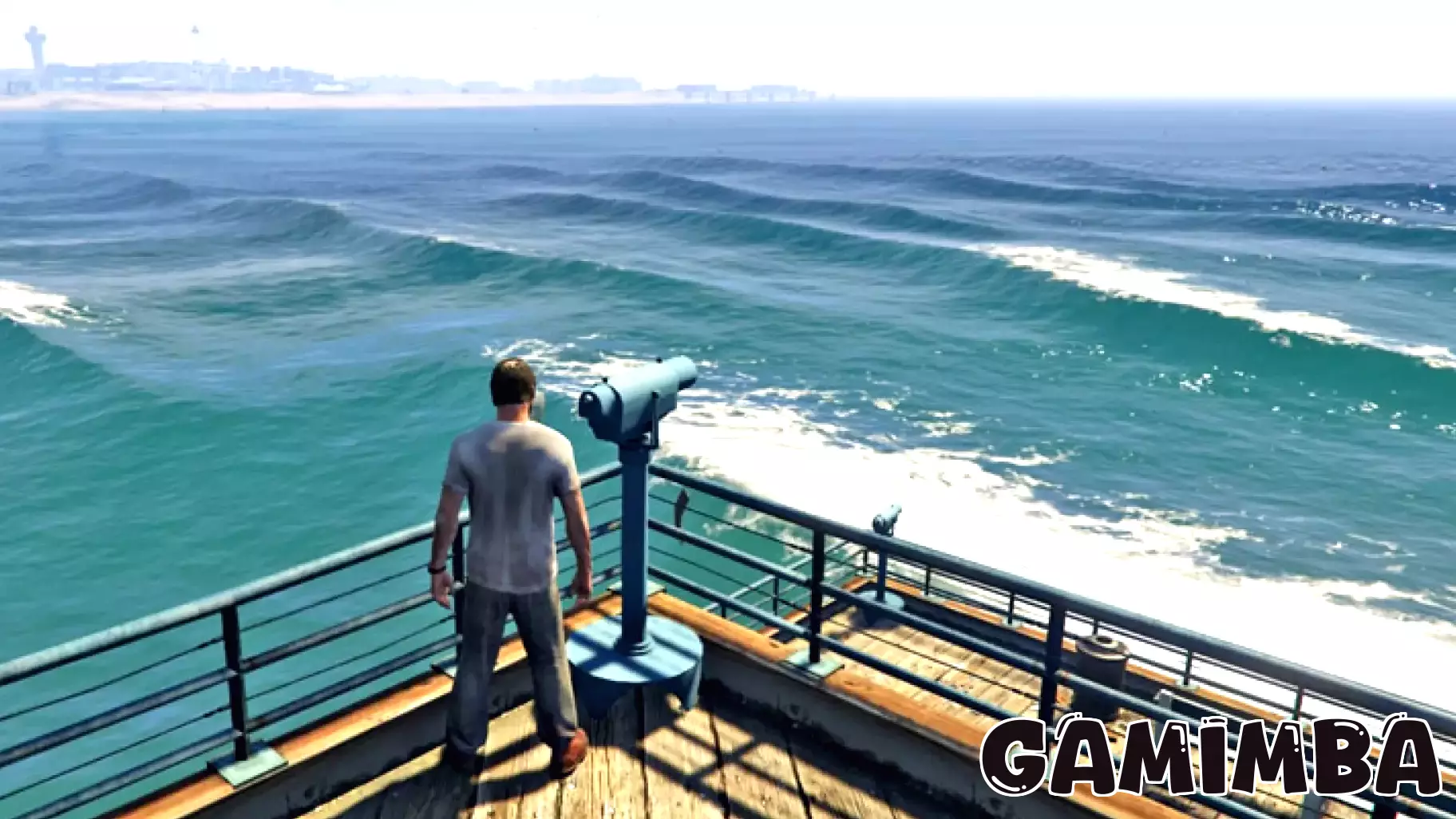
For decades, video game developers have struggled to make water look and behave like the real thing. While modern games can render detailed faces, sprawling cities, and vast forests, a convincing ocean remains one of the hardest problems to solve. The challenge lies in the sheer complexity of fluid dynamics. Real waves are not simple repeating patterns; they are chaotic, influenced by wind, gravity, and the shape of the seafloor.
Early games used flat, animated textures to fake the effect, but that approach quickly breaks down when a player gets close. The first major breakthrough came with Gerstner waves, a mathematical model that simulates the rolling motion of water by moving individual vertices on a surface. This gave waves a more natural, curved shape but still looked too uniform and repetitive for large open seas.
The next leap was the Fast Fourier Transform, or FFT, which uses frequency analysis to build a wave pattern from many overlapping sine waves. This creates a much more realistic, choppy surface that reacts to different weather conditions. However, FFT is computationally expensive and struggles with shallow water or waves breaking near a shore. The interaction between a wave and a beach, where the water curls and foams, requires separate particle-based systems that are even harder to run in real time.
The latest frontier is full fluid simulation using techniques like Smoothed Particle Hydrodynamics. This treats water as millions of individual particles, each with its own physics. It looks incredible for small scenes, like a boat wake or a crashing wave, but it demands enormous processing power. Even the most powerful gaming consoles can only handle a limited number of particles before the frame rate drops.
Developers now use a hybrid approach: FFT for the open ocean, Gerstner waves for close-up detail, and particle systems for spray and foam. But the holy grail, a fully simulated ocean that reacts to every object and wind gust in real time, remains just out of reach. As hardware improves, that goal gets closer, but for now, the sea in games is still a carefully crafted illusion.
MORE NEWS

July 20, 2026 - 10:10
7 great games to play if you enjoyed Christopher Nolan's The OdysseyIf Christopher Nolan`s take on The Odyssey has left you craving more epic journeys, time-bending narratives, and mythic scale, the video game world has plenty to offer. Nolan`s signature style--non...

July 19, 2026 - 22:06
Video game soundtracks coming to life at Koger CenterThe South Carolina Philharmonic is bringing the sounds of the digital world to the concert hall. On August 22, the orchestra will perform `Video Games In Concert` at the Koger Center, offering a...

July 19, 2026 - 14:01
Forget 'Fallout,' FX's Upcoming Video Game Adaptation Has a Perfect CastFX is betting big on its next video game adaptation, and early signs suggest it might just outshine Amazon`s `Fallout.` While `Fallout` set a high bar for the genre, the upcoming series based on a...
July 18, 2026 - 18:44
1989 8-Bit RPG Is Coming to PS5 and Nintendo Switch 2A cult-favorite 8-bit role-playing game originally released in 1989 is making its way to modern hardware. The title, which draws heavy inspiration from Greek mythology, is now available on...